Monday, April 9, 2018

"The government should never be in the business of competing with private business."


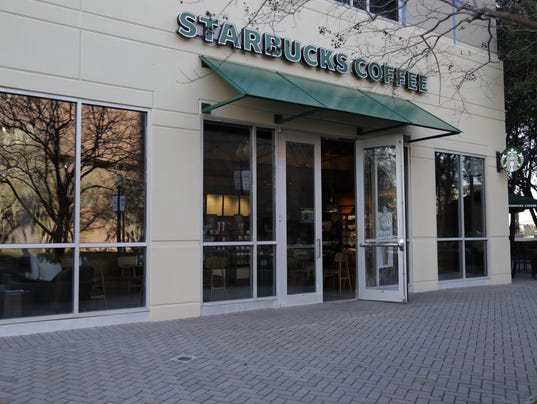
Not only did they lose $200,000 they spent over $841,000 to build it out. This is a great example of why the government should not spend taxpayers' money to directly compete against local businesses. The government should create the entrepreneurial ecosystem for private businesses to create goods and services that the market wants. 

As the article points out, FSU has Starbucks as well as two RedEye Coffees, but FSU does not own them or run them they contracted Sodexo to run the businesses and then Sodexo made strategic partnerships with local and national vendors to execute. 

Another great example of the government creating an entrepreneurial ecosystem to thrive is the new South City area. There were empty buildings that were bringing down the neighborhood, so the city created economic incentives in the form of tax credits for private business to come in and risk their own capital. The result? Happy Motoring, Proof, and Catalina Cafe are all investing their own money to revitalize a part of Tallahassee creating jobs and tax revenue. 

Government/Private partnerships as long as they are open, inclusive, and transparent are essential for a thriving entrepreneurial ecosystem, but the government should never be in the business of competing with private business. 

Hopefully, this is a good lesson on where the "lines" are.

#business #tax #coffee #investments #government #economics#transparency #partnerships #ecosystem

Wednesday, February 28, 2018

What are you doing? A Proverb


Are you "The Boss," a manager or a leader? This proverb will let you know.

The Proverb of the WHY: A ancient traveler entering Rome, stops to examine a huge construction project. While admiring the scale of the project, he sees three stone masons, hard at work with their hammers and chisels.

“What are you doing?” asks the traveler.

“Breaking stones,” grunts the first.

“Making a wall,” says the second.

“Building a cathedral!” proclaims the third.

Helping your team understand "the why" is the difference between them breaking stones and building a cathedral. Bosses have people who break stones, managers have employees who make walls, and leaders have partners in building a cathedral. 

Ask your team "what they are doing?" If the answer is not, "a cathedral," you have some leadership work to do.

Saturday, January 27, 2018

Entrepre-Villains: The Deadly Enemies of Your Startup


This is the follow-up blog post to Superpreneurs: What's your Entrepreneurial Superpower? you may want to check it out before reading this one. 

You may have heard the statistic that 90% of all startups fail. Actually, this number is a bit misleading and not completely accurate. The real statistics according to bis.gov are about 50% fail in the first five years and only about 20% last more than twenty. Still not great, but at least we are going forward into reality with facts instead of fear.

Throughout my life as an entrepreneur, I have seen too many startups fail to reach their full market potential or just flat out fail because of the following nasty Entrepre-Villains. I hope these are helpful and you take the time to harden your startup against these deadly enemies.

Entrepre-Villain #1: Inauthenticity 
Entrepreneurs often navigate in the grey area between marketing their brand as how they see it in the future and the current reality of what they really can deliver. I have seen many startups fail or not reach their full potential because they lost credibility because their enterprise was all show and no go.

Entrepreneur's Defense: Simply be honest about what you can deliver now and what you are working on. People love to help people just starting out, just don't lie to them about what you can deliver, all that will do is make them mad.

Entrepre-Villain #2: Mission Drift
I get it, entrepreneurs need money and if someone is willing to pay you for something that is not at your core, you want to say, "Yes." Unfortunately, when you say, "yes" to things that are not part of your core, you are saying, "no" to what you are trying to start.

Entrepreneur's Defense: Stratic partnerships are a great way to defend your startup against mission drift. By helping a customer connect with the right supplier you win twice now and have banked some goodwill for the future.

Entrepre-Villain #3: Vehement  
While terminal tenacity is a superpreneur superpower, vehement plodding can be the death of your startup. All successful startups have pivoted as they have learned more about their product/service, market factors, and customers. There is no way you are going to design a product or service and launch it in the exact way you envisioned it at the start and if you try you will fail. Tenacity is an entrepreneurial superpower, but being vehemently opposed to pivoting off your original idea is death.

Entrepreneur's Defense: I have found humility to be the best defense against many entrepreneur's tendencies to be detrimentally committed to their original idea. It is pride that makes entrepreneurs hold on to an idea rather than being able to pivot to the breakout solution. 

Entrepre-Villain #4: Apathy
Apathy leads to a slow an agonizing death for a startup. Unlike other villains, this villain creeps in slowly and is hard to detect. It starts in the mind of your time with thoughts like, "it's good enough" or "it really doesn't matter" and ends with missed deadlines or shotty work. Have no doubt, this villain will attack your startup sooner or later and if you fail to lead your team out of it, you will die (or wish you were dead).

Entrepreneur's Defense: I'm sure you have heard the saying, "hire slow and fire fast." This is a very difficult lesson for entrepreneurs to learn and it is more costly every day you let an apathetic team member stay. Apathy is cancer and you either kill the cancer or it will kill you. 

Entrepre-Villain #5: Discouragement
You are going to have setbacks in your startup, it is just the reality of the startup game. How you lead your team through the discouraging times will determine the success or death of your startup. Setbacks, losses, and obstacles are obvious and quickly grab your team's attention and without the right leadership, they can pull your team down into deadly discouragement. 

Entrepreneur's Defense: A scoreboard that tells the companies story will help keep the setbacks, losses, and obstacles in context. Determine key metrics, put them in a public place, and celebrate the wins and milestones in order to keep the setbacks in context. 

All of these Entrepre-Villans remind me of Walt Kelly's long-running cartoon strip, Pogo. The strip to the left shows Porkypine and Pogo walking through the forest, having trouble navigating through trash and pollution when Pogo turns to Porkypine and says, “We have met the enemy and he is us.”

Entrepreneurs are often times their own biggest enemy by being inauthentic, having lack of focus, refusing to pivot, allowing apathy on the team, or by losing sight of the overall progress and succumbing to the discouragement of the current situation. This is why smart investors like to invest in entrepreneurial teams and not an entrepreneur's idea. Ideas are not special, people who make ideas a reality are special and in order to build something great, you need a team. 


Saturday, January 13, 2018

Superpreneurs: What's your Entrepreneurial Superpower?


Being a successful entrepreneur requires superpowers that most people do not possess. The following six superpowers are needed for today's entrepreneurs to have victory over the entrepre-villains (next blog post) who are trying to kill their brand.

Relentlessly Resourceful
The fact is as an entrepreneur you are never going to have all the resources you need in the way you initially thought. Superpreneurs are relentlessly resourceful in finding what they need through nontraditional channels or are able to figure out a completely different way of getting the job done.

Terminally Tenacious
I've met a lot of smart people with clever ideas who hit one roadblock or another and were never able to bring their idea it to market. To me, the best entrepreneurial superpower is not intelligence, connections, or money it is terminal tenacity. Why? Because as my Mum used to say, "persistence wears resistance" and the best entrepreneurs in the world are the embodiment of that axiom. Investors I know will bet on an entrepreneur who is terminally tenacious every time over someone with a great idea or polished business plan.  

Preeminently Passionate 
The etymology of the word 'passion' is from the Late Latin word passionem meaning “to willingly endure suffering.” If there was ever a superpower, an aspiring entrepreneur is going to need, it is preeminent passion because the life of an entrepreneur is hard. It is early mornings and late nights. It is celebration dinners that are marked by adding an egg to your ramen then getting back to work. It is watching your friends house while they are vacationing in Europe. If a person is not "willing to suffer" they should go find a nice office job somewhere. 

Overtly Optimistic 
I've never met a successful entrepreneur who is a pessimist or a "realist" which pessimists like to call themselves. In fact, the best entrepreneurs have the superpower of overt optimism (not to be confused with overoptimism). Investors, team members, and customers need to be inspired and believe they can create the change they want to see in the world. The entrepreneurial superpower of overt optimism is the strength your team relies on to keep moving forward when the times are tough. 

Enthusiastically Evangelistic  
No one sees or believes in the future you see or believe can be a reality. They're not against you; they are just busy living their life doing the things that make sense to them. Every successful enterprise has a lead evangelist who is out "sharing the good news" about how your product or service can make life better. Without an enthusiastic evangelist, you may discover a cure for cancer, but if you don't have someone who can shout it from mountain tops, it will never save one life. 

Serendipitous Solver 
I was recently on a local NBC station being interviewed with one of the best serial entrepreneurs I know, Matt Thompson the Managing Partner of For the Table. During the interview, Matt was asked, "What his main duty was as an entrepreneur?" And he said, "Solve problems." That's it! The primary duty of an entrepreneur is to solve problems. Entrepreneurs solve a problem with the product or service they create, they solve problems along the way to bring it to market, and they solve problems when it gets out into the wild. If an entrepreneur cannot solve a problem, then their investors, team, and customers suffer.  

Let me leave you with a quote from George Bernard Shaw, who said, "Reasonable people adapt themselves to the world. Unreasonable people persist in trying to adapt the world to them. Therefore, all progress depends on unreasonable people." Entrepreneurs are by nature "unreasonable people," they disrupt the status quo and create a new world in which they want to live. Pretty presumptuous, huh? I love it.


What's your Entrepreneurial Superpower? 

Up Next: Entrepre-Villains: The Deadly Enemies of Your Startup

Wednesday, December 27, 2017

We Can Do Better Than Economic Slavery

Economic slavery is thriving in agriculture, and we can do something about it. The same exploitive economic principles used in the USA in the 18th and 19th century with slavery are still being used in the 21st century by many companies. Companies commoditize agriculture to provide consumers with cheaper prices and to enrich themselves. Unfortunately, these “cost savings” come at a high human cost by enslaving people in the cycle of poverty, limiting education for children, and disconnecting us from our food and the people who grow it (arguably a leading cause of the USA obesity epidemic).

I would like to highlight coffee since it is something most of us purchase every day. The truth is the coffee business is a dirty business that has made a few people very rich by economically enslaving many others. I want to share with you three of the most egregious practices that go into your cup of morning Joe.

1a. What is Wrong?  Plantations (Bad for People and the Environment)
The same economic principles used on cotton plantations in the 18th and 19th century are being used today on most coffee plantations.  While plantation workers are not in physical chains, they are subjected to inhumane conditions and in many cases are only paid about $1 a day.

The other issue of plantations is their negative impact on the environment. Clear-cutting rainforests to make room for a coffee plantation is a real problem for the ecosystem, the animals, and makes for bad tasting coffee.

1b. How we can do better.
Ask your favorite coffee shop if they buy from plantations? If they do, ask if you can have the name of the plantation and Google it to see their labor practices. Not all plantations engage in unethical labor practices, but most do, so if you are going to buy plantation coffee (which I hope you don’t care for environmental reasons) be sure they are not engaged in economic slavery.  

Bonus: Ask if their coffee is organic?

2a.  What is Wrong?  Brokers
Farmers call brokers, “coyotes” because they are scavengers who feed off the plight of others. Brokers are part of the corporate coffee system that breaks the connection between the consumer and farmer. Many times, brokers work like a “payday loan” place prepaying for a coffee harvest in advance at a fraction of the true value.  

2b.  How we can do better.
Ask your favorite coffee shop who supplies their beans? They may locally roast, but obviously, the bean is not locally grown, so ask where they got them? Are they a direct importer or do they use a broker? If they use a broker, ask which one? If they won’t tell you, find a coffee shop that has a transparent supply chain and support them.

3a.  What is Wrong:  Blends
Unfiltered truth: Blends like Breakfast Blend, Holiday Blend, and fortunate blend are used by corporations to comedies coffee and disconnect the consumer from the farmer. These blends are a mixture of cheap beans blended and marketed in a way to raise the retail price on the low end and most likely unethically source coffee beans.

3b.  How we can do better.

Only drink single origin coffee that you can track back to the farm. It is easier than you think. Next time you are at your local coffee shop ask your barista, “What farm and region is the coffee from?” If they don’t know, ask if they can find out? If not, ask if there is a local coffee shop that does server ethically sourced single origin coffee and go there. 

I would like to invite you to learn more on January 11th at the Labor Trafficking Food Chains Forum


Tuesday, December 19, 2017

3 More Reasons Lousy Students Make Great Entrepreneurs


Lousy Students Learn How to Fail
In order to become a great entrepreneur, you need to know how to fail. Why? Because entrepreneurship is mostly about failing forward. You try, you fail, and then you try again until you break through (or fail again).

Many entrepreneurs first learn this critical entrepreneurship skill in school. As a lousy student, you get used to failure: you fail tests, homework, classes, and even whole grades. As a lousy student, if you don't get comfortable with failing, you'll probably drop out and start a business or something.

Lousy Students Learn How to Ask for Help
Lousy students who want to pass, learn how to ask for help. Fortunately, this is an entrepreneurship skill that is more important than the class the entrepreneur is trying to pass. Great companies and organizations are built one ask at a time. Entrepreneurs are constantly seeking and asking for help: help from investors, help from talent and help from their network.

Lousy Students Learn How to Pivot
The last thing failing teaches entrepreneurs is if you don't want to fail again, you need to try it a different way. Every idea, before it has its breakthrough will go through several iterations or pivots. Many companies started as something else: Avon was started by a door to door book salesman who gave away little bottles of perfume, Nokia started as a pulp mill, and Wrigley's was originally a baking powder and soap company. Failing forward and getting up to do it another way is at the heart and soul of entrepreneurship.

Who is your favorite flunky entrepreneur? 

Sunday, December 10, 2017

FSU's Parking Problem Solved (A Free Idea for an Ent)


Here is a simple idea on how to help solve the parking problem at FSU. 
I am freely giving this idea to anyone who wants to run with it. 

The Problem: Very difficult to find parking on campus.

The Solution: Create an app call CARma that rewards people who are leaving with a parking spot to alert parking lot seekers that you are leaving. 

How it Works: 
  • A person walking toward their car is alerted by the app to see if they are leaving.  
    • If they are leaving and select "yes" they are given two CARma points from the CARma bank.
    • The app then updates the app's parking map to show that a spot is coming available. 
    • A seeker can claim an available spot which moves two CARma points from the seeker into an escrow account that will reward the user offering the spot when the seeker parks.
      • This will incentivize the person leaving to make sure the person who claimed the spot 
      • There can also be tipping
        • Once the seeker claims an available spot both parties can track and message each other.
Revenue Model: I have thought of several different ways to monetize this app, but I'll leave it up to you.

BTW: I did a quick check on the Play Store and did not see any app like this or any app called CARma. 

The cool thing is this is scalable to anywhere there are parking issues. 

    Monday, December 4, 2017

    Three Reasons Why Lousy Students Make Great Entrepreneurs

    I was asked by a local leadership group to speak to an assembly of high schoolers who are interested in entrepreneurship. When I asked them about what aspect of entrepreneurship they would like me to speak about, they said, “whatever you think would interest high schoolers.”

    Honestly, I was a lousy high school student and always struggled with traditional education. Then it hit me! Most the entrepreneurs I know were lousy students, and it got me to thinking, “Why?” Well, I came up with three behaviors that may infuriate teachers and result in scholastic failure, but turbo charge entrepreneurship and thrill investors.

    Teacher says, “Student doesn’t follow directions.” In entrepreneurship this is called “disruptive,” and it is the common trait of all successful entrepreneurs. Disruption is at the core of all entrepreneurship, in fact, this is what an entrepreneur does—disrupts the status quo. An entrepreneur looks at what is and says, “I can make it better/cheaper/faster!” As a result, disrupts the market.

    Teacher says, “Student takes shortcuts” In entrepreneurship, this is called, “a hack” and it is essential to creating an MVP (minimal viable product). Most entrepreneurs do not have the time or the money to make a perfect product, so they use hacks to save time and money. The cool thing is many times these hacks lead to innovation and can make the product even better/faster/cheaper.

    Teacher says, “Student needs to pay attention in class” In entrepreneurship, daydreaming is called, “ideation.” “Visionary” entrepreneurs are paying attention, just not necessarily to what everyone else is paying attention. For entrepreneurs, the present is boring and they compensate by spending their mind time actively envisioning a more exciting future.

    Many teachers are frustrated by disruptive, shortcut taking, dreamers who are not paying attention to their carefully prepared lesson. I get that, but perhaps traditional education is not the best education for everyone. Perhaps education is ready for an entrepreneur to disrupt the status quo and create a better/faster/cheaper way to inspire individual learning.


    Have anything to add? I would love to read your comments. 

    Sunday, November 26, 2017

    You're One Question Away

    Sales professionals, if you want to get to the next level, stop pitching and start asking. It is really surprising to me how many sales professionals have not learned or been taught that questions are the "secret sauce" of sales.
    I cannot tell you how many sales professionals have walked away from a sale/future sale with me simply because they did not ask a follow-up question. They took my objection as an unequivocal no, but the reality is many times, I just haven't been asked the right question.
    If you abide by The Golden Rule for Sales Professional, I guarantee you will increase your client base and increase your sales. What is The Golden Rule for Sales Professional?
    The Golden Rule for Sales Professional
    Always ask a question that gets a "Yes" before you say, "Thank you for your time."
    I know it sounds simple, but it works. Questions like,
    • May I follow up with you next month?
    • May I send you a sample of a new product we just developed?
    • May I send you a connection request on LinkedIn?
    Your best clients are built on the foundation of the relationship, and solid relationships take time to build. You're one question away from beginning that relationship because relationships are built one ask at a time.

    What is a Social Impact Company (SIC)?

    This is an expanded excerpt pulled from an article I wrote last week "Is Your Company SICk?" I received feedback that people wanted to know more about the Triple Bottom Line (TBL) and how to achieve it.
    Social Impact Company (SIC) and the Triple Bottom Line?
    When I was in business school, it seemed like all instruction was tagged with the line “at a profit.” Instruction like, “Provide your customers with what they want, at a profit.” I get it. I agree with it. It just wasn’t enough for me.
    When I started RedEye Coffeealmost 15-years ago, I wanted to achieve a Triple Bottom Line (TBL). A TBL conceives of profit in a more holistic way. It takes into account the total impact of commerce and is committed to a mutually beneficial supply chain that considers financial profit and both social and environmental impact in determining the enterprise's success.
    A commitment to a TBL drives passionate conversations in executive meetings, which I call “managing the tensions.” In these conversations, the leadership team holds each other responsible to the TBL. Why do I call it “managing the tensions?” Quite simply, a SIC can’t do everything. A SIC first and foremost must make a financial profit—employees, landlords, and the IRS demand to be paid. So, there are "tensions to be managed" between having stakeholder and customer pride all the while achieving a TBL.
    Conceptually, a SIC looks like the Venn diagram on the left. This diagram drives and guides the conversations in the boardroom on how to maximize financial profits, environmental responsibility, and social good. It has been my experience that there is a bit of a transitional phase implementing the TBL. It is mostly about asking questions like, "What would be the impact if we rethought our marketing budget from traditional advertising to financially partnering with our customers to achieve the social good we want to see in the world?" It is not something that will happen overnight and it will demand your teams' best thinking. But this is a good thing when you consider that reports show that 70% of the American workforce is disengaged.
    What aspiring SICs will quickly discover is the Venn won't look as pretty as the one above, it will look more like the lopsided one on the right. As a business transitions toward being a SIC and incorporating a TBL there will be anxiety while incorporating a new business paradigm. This is normal and is one of the "known knowns" in the SIC process. It is my contention that traditional corporations will need to move toward being a SIC to be competitive in the 21st Century by holistically reimagining their business model and incorporating the TBL. It's not just a good thing to do, it is the future of commerce.
    Do you want to be a SIC? Contact me www.markmcnees.com
    About Mark McNees: Mark is the Social Entrepreneur in Residence at FSU's Jim Moran School of Entrepreneurship, Director of Social Entrepreneurship and Innovation at FSU’s Devoe Moore Center, Founder/CEO of RedEye Coffee (selected by the Newman’s Own Foundation and KIND Foundation as one of the best Social Enterprises in America), and a business/organization Social Impact Conference speaker. 

    Value Proposition: Which Coffee Would You Choose?

    I guide my students through this value proposition every semester in my Social Entrepreneurship and Economic Development class at FSU. There seems to be a collective neurosis that to succeed in business you must win the race to the bottom (be the cheapest). Social Entrepreneurship, in stark contrast, predicates that people be loyal to brands with the product/service that offers the best value.
    The Academic Exercise goes as follows: 
    Me: Given seemingly three identical cups of coffee: one costing $1.75, second $2.25, and third $2.35; which one would you choose?
    100% Students: The coffee costing $1.75
    Me: Right. Me too. Now, what if I told you cup #1 has unethically sourced coffee and cups #2 and #3 are ethically sourced?
    90% of Students: We would buy cup #2, the ethically sourced coffee costing $2.25.
    Me: Right. Me too. Now, what if I told you that cups #1 and #2 use chemicals that are harmful to the environment and clear-cut rain forests to have bigger crop yields?
    85% of Students: We would buy cup #3, the earth friendly, organic coffee costing $2.35.
    Me: Right. Me too. Now, what if I told you cup #3 is also served in earth-friendly cups, made by a barista earning a fair wage, and 100% of the profits go to local and global empowerment charities?
    95% of Student: We would buy cup #3, the ethically sourced, organic coffee, with a social mission.
    That is a Value Proposition.
    Social Entrepreneurs run a different race.

    Toyota's Secret of Success

    All of us have been drilled by a 4-year-old who keeps asking the question, "Why?" It usually goes something like,
    Kid: Why is the sky blue?
    Adult: Because that is the way God/nature made it.
    Kid: Why did God/nature make it that way?
    Adult: Ah, I don't know just because.
    There is a theory that was formally developed by Sakichi Toyoda and is used within the Toyota Motor Corporation that is credited for their legendary manufacturing system. That theory is called the 5Whys. Toyoda espoused that to get to the root of the real problem you must ask "why" five times. So, in the above example, if the adult did not punt on answering the kid's "whys," by the fifth "why" they would have ended up with the following explanation of why the sky is blue:
    The sky is  blue because molecules in the air scatter  blue light from the sun more than they scatter red light.
    The 5Whys are critically important in solving problems, not only in manufacturing but for all problems-business, social, and personal. Abert Einstein famously said, "If I had an hour to solve a problem I'd spend 55 minutes thinking about the problem and 5 minutes thinking about the solutions. Toyoda and Einstein both knew the surface problem is just a symptom of the real problem. The 5Whys is a tool to get beyond the symptom(s) and get to the root cause.
    The 5whys are especially important for Social Impact Companies (SIC) and Social Entrepreneurs. All too often a well-intentioned person, organization, or government will try and "help" people only ending up making the problem worse by treating a symptom and not solving the core issue. This is evidenced by a mountain of failed initiatives that have compounded problems like homelessness, hunger, poverty, and drug addiction.
    Shallow thinking has led people, organizations, and governments to dump an enormous amount of resources trying to solve these symptoms, leading to disastrous results. Shallow thinking like, homeless people need homes, hungry people need food, poor people need money, and drug addicts need to "Just say, No" are just a few examples of how symptom solving actions don't actually solve anything.
    Nancy Reagan, fell victim to this shallow thinking with her "Just say, No" campaign. It is a prime example of why it is necessary to employ the 5Whys when trying to solve a problem. Nancy Reagan was technically correct, if people just said no to drugs, they would not become addicted. Tragically, drug addiction is not caused by saying, "yes" it is much more complex than that as we have seen with the recent opioid addiction epidemic that is now credited with over two-thirds of all overdose deaths in America.
    Bellow is a very quick example of how the 5Whys can help people, organizations, governments discover the real problem using the opioid crisis.
    This is only an example and not intended to imply or suggest a solution to the very complex issue of drug overdose and drug addiction.
    If Nancy Reagan and her team would have employed Toyoda's "5Whys" I believe they would have implemented a completely different strategy to combat America's growing drug problem. It is pure conjecture, but if they would have done so, perhaps American would not be in the addiction/overdose mess we are currently experiencing.
    Again, these are very complex issues and my intent is to give you a powerful tool to solve the real problem you are facing. The following are some best practices when using the 5Whys.
    Best practices using the 5Whys
    1. Use paper or a whiteboard
    2. Write down the problem in a way everyone understands
    3. Human error cannot be the answer to the 5th Why
    4. Honor the process (don't take shortcuts)
    5. Focus on cause and effect (using the above example: Why1 are people ODing? Because they are drug addicts. -> Why2 are they drug addict? Because they took too many perscribed opiod drugs....)
    I would like to encourage you to try using the 5Whys the next time you or your team are faced with a problem. It may seem a little clunking at first, but once people get used to honoring the process it can be a powerful tool in solving the real problem.